Mbombela (Nelspruit) – The MEC for Mpumalanga Economic Development and Tourism, Jesta Sidell, has identified the Nkomazi Special Economic Zone (NSEZ) as a crucial driver for industrial development, manufacturing growth, and the enhancement of regional trade.
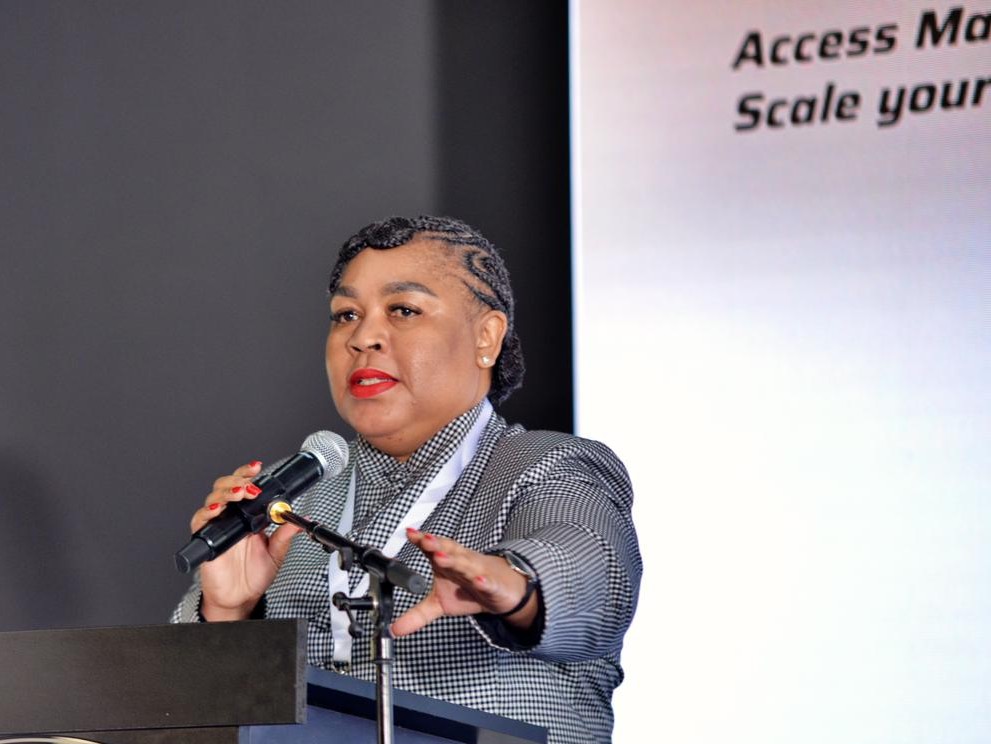
This vision was articulated by MEC Sidell during the inaugural Micro, Small, and Medium Enterprises (MSME) Manufacturing and Industrialist Summit 2026, held in Malelane today, Tuesday, May 19, 2026.
In her address to government officials, industry leaders, development finance organizations, and the manufacturing sector, MEC Sidell described the summit as a “deliberate, strategic platform” designed to fundamentally reshape the economic landscape of the Ehlanzeni district and Mpumalanga as a whole.
“This summit is more than just a date on our provincial agenda,” MEC Sidell emphasized.
“It serves as a strategic intervention aimed at accelerating industrial transformation, supporting MSMEs in manufacturing, and creating market access opportunities for local businesses.”
Organized by the NSEZ in collaboration with the Mpumalanga Department of Economic Development and Tourism (DEDT), the summit gathered active manufacturing Small, Medium, and Micro Enterprises (SMMEs) and emerging industrialists.
Additionally, logistics stakeholders and market-access partners were present to explore opportunities related to manufacturing growth, funding access, procurement integration, and export readiness.
MEC Sidell announced that the NSEZ is shifting from planning to implementation, following the allocation of R45 million from the provincial budget for the 2026/27 fiscal year. This includes a strategic partnership with Infrastructure South Africa to secure an additional R1.2 billion for Phase 1 construction.
“The township establishment is complete, the 300 hectares are secured, and bulk engineering designs for water, electricity, and sewerage are nearing completion,” explained MEC Sidell.
She also highlighted the growing investor confidence in the project, noting the interest of over 28 serious investors in sectors such as agro-processing, manufacturing, logistics, and green energy, which could lead to a projected investment pipeline exceeding R5 billion and the potential creation of over 45,000 jobs.
The global logistics firm DP World has finalized lease agreements to establish the logistics hub component of the special economic zone.
Nevertheless, MEC Sidell stressed that the success of the NSEZ will ultimately rely on the engagement of local businesses and communities within the industrial ecosystem.
“The true measure of the SEZ’s success will not just be the multinational corporations that set up here,” she stated.
“It will be determined by how many local MSMEs from KaMhlushwa, Tonga, Komatipoort, and Malelane become integrated into those global supply chains.”
A central theme of the Summit was the importance of manufacturing in fostering sustainable economic growth and job creation.
MEC Sidell emphasized that manufacturing enterprises must move beyond “survivalist modes” and embrace competitiveness, innovation, and operational excellence to effectively engage in both local and international markets.
“To prosper in the modern economy, our MSMEs must produce goods that meet demanding local and international standards,” she stated.
“We encourage our small industrialists to utilize technology, operational excellence, and quality management to ensure that products made in Nkomazi can compete on a global scale.”
The MEC further highlighted the strategic significance of the NSEZ’s location along the Maputo Development Corridor, which directly connects South Africa to Mozambique, Eswatini, and wider markets in the Southern African Development Community.
“With the establishment of the African Continental Free Trade Area, businesses are no longer just manufacturing for Malelane or Ehlanzeni,” she explained.
“They are producing for a market of 1.3 billion people across the African continent.”
MEC Sidell also emphasized the government’s commitment to dismantling barriers that hinder the participation of black-owned enterprises, youth, and women in manufacturing and industrial development.
Through collaborations with organizations like the National Youth Development Agency, development finance institutions, and the Mpumalanga Economic Growth Agency, the government is working to improve funding access, enterprise development, and industrial incubation support.
The Summit included discussions on procurement opportunities, export pathways, logistics integration, and supplier development, featuring the eagerly awaited “Dragons’ Den” segment, where select manufacturing enterprises pitched directly to funders and industry stakeholders.
In closing, MEC Sidell described the summit as a vital milestone in Mpumalanga’s industrialization journey.
“The inaugural MSME Manufacturing and Industrialist Summit represents a point of no return for Mpumalanga’s industrial advancement,” she declared.
“Let us work together to transform Nkomazi from a transit corridor into a thriving, world-class industrial hub where local MSMEs produce the goods that will propel Africa’s future.”