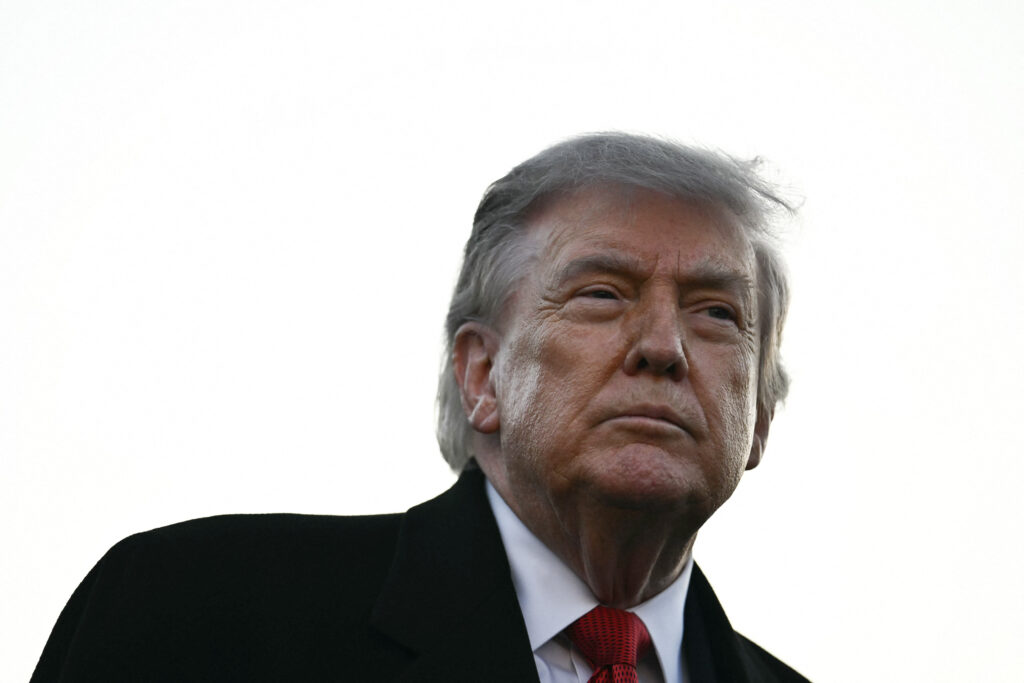
President Donald Trump cautioned that he may soon resume attacks on Iran in an effort to finalize a deal to end the conflict, following his announcement that he had cancelled a planned US strike.
“I hope we don’t have to go to war, but we might need to deliver another substantial hit,” Trump told reporters on Tuesday. When asked about the potential timing, he responded: “I’m referring to two or three days, possibly Friday, Saturday, or Sunday. Perhaps something early next week — a narrow window.”
Trump’s statements have raised the prospect of reigniting tensions with Iran, which has so far refused to meet Trump’s demands to eliminate the remaining elements of its nuclear program after weeks of strikes that began in late February. Nonetheless, the president has frequently indicated — and then backed away from — renewed military action since the ceasefire was enacted on April 8.
The conflict has blocked the Strait of Hormuz, a vital route for oil and gas transport, resulting in a spike in global energy prices and inflation. Yields on long-term US Treasury bonds have reached their highest points in nearly two decades due to worries about the macroeconomic effects of the Middle East situation.
In a Tuesday afternoon address, Vice President JD Vance offered a somewhat more hopeful outlook on the negotiations, while also suggesting the possibility of renewed strikes. “We believe we’ve made significant progress, and that the Iranians are willing to reach a deal,” he noted, adding that “option B” would involve restarting military actions.
“But that’s not the president’s preference,” he continued. “And I don’t believe that’s what the Iranians want either.”
ADVERTISEMENT
CONTINUE READING BELOW
Despite suffering the loss of numerous high-ranking officials and a considerable portion of its military strength due to US and Israeli airstrikes, Iran’s government has displayed resilience, frustrating US officials by maintaining control over Hormuz, which has pushed fuel prices in the US to their highest in nearly four years.
On Monday, Trump announced he had postponed a planned attack on Iran, originally set for Tuesday, at the request of Saudi Arabia, Qatar, and the United Arab Emirates. Previously, the president has cited requests from allies and partners, including mediator Pakistan, as influencing his changes in policy regarding the Iran conflict.
Brent crude oil prices fell about 1% on Tuesday, trading above $110 per barrel following Trump’s announcements late Monday. The benchmark has still risen over 50% since the conflict commenced with US-Israeli strikes on Iran, keeping traders vigilant regarding the potential for renewed hostilities.
Shipments through Hormuz have once again declined, although traders are closely monitoring whether the NATO alliance will provide support to ensure safe passage for vessels if the waterway is not reopened by early July.
While Trump’s remarks usually impact financial markets related to Iran, market analysts have noted that this effect seems to be waning as the president consistently makes threats that he fails to act upon.
ADVERTISEMENT:
CONTINUE READING BELOW
“These verbal assertions from Trump used to elicit a significant bearish response in prices, but their influence appears to be diminishing, unless backed by action,” stated Bjarne Schieldrop, chief commodities analyst at SEB AB. “From what we can see, no substantial progress has been made in negotiations between the US and Iran, as both sides firmly hold onto their previous demands.”
The tenuous nature of the truce was underscored on Sunday when a drone targeted the UAE’s Barakah nuclear energy plant, setting off a fire at the facility and requiring the use of emergency generators.
The United Nations’ nuclear regulatory body reported late Monday that normal operations at Barakah have resumed, alleviating safety concerns surrounding the largest atomic facility in the Middle East.
Tehran has indicated it might initiate strikes against its Gulf neighbors again if the US resumes military operations.
© 2026 Bloomberg L.P.