For South African investors aiming for a stable yet swiftly growing property market, the UK is an attractive option.
Amid global economic uncertainties, the UK offers a unique mix of structural supply shortages, strong tenant demand, and favorable borrowing conditions compared to South Africa.
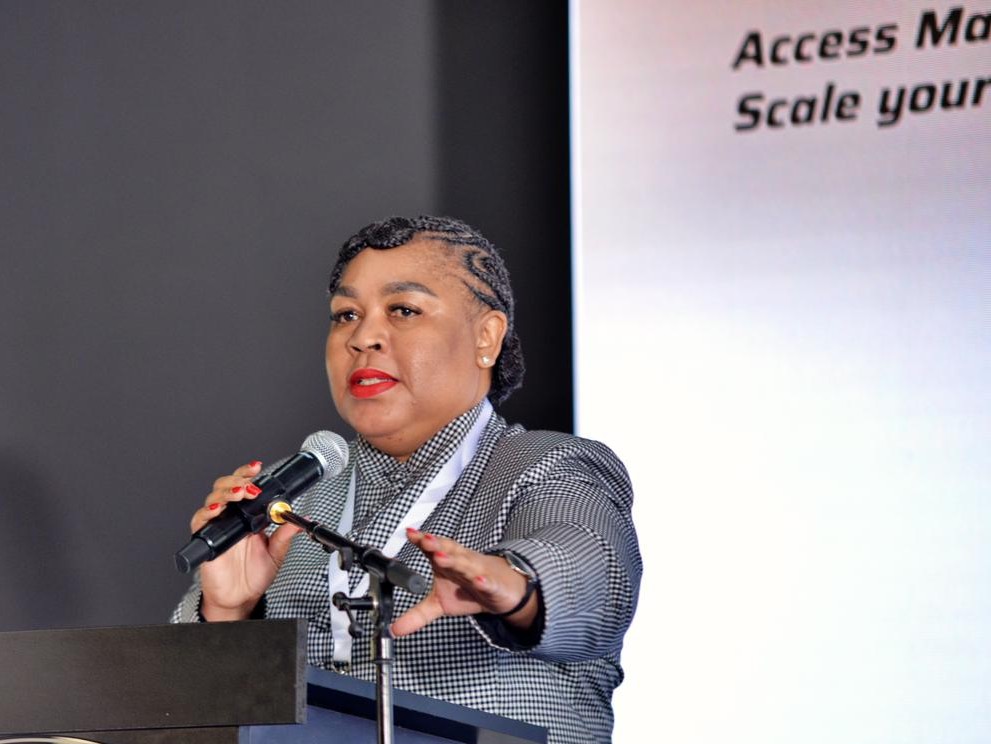
Mikayla Morkel-Brink, an offshore real estate advisor at Sable International, points out a vital disparity driving this market: “The UK housing sector faces a supply shortage. Although the government is building around 300,000 new homes each year, there remains an annual shortfall of approximately 100,000.”
“Bridging this gap will take years. Demand continues to grow, which simplifies tenant acquisition—precisely what investors seek.”
Recent data supports this perspective. In 2025, England produced between 208,600 and 231,300 net additional homes, falling short of the government’s yearly target of 300,000 homes.
This persistent undersupply, alongside rising household formations and constrained new stock, continues to enhance both rental demand and capital values in the medium term.
For South Africans, the attraction goes beyond mere statistics.
“Investing in a Sterling-based asset is essential for South Africans,” Morkel-Brink explains.
“The UK represents a long-term investment grounded in strong fundamentals.”
As the South African rand often fluctuates, owning property in pound Sterling serves as a natural hedge against local currency shifts.
The recent increase in South Africa’s Single Discretionary Allowance (SDA) from R1 million to R2 million per adult annually (effective April 2026) has made smaller UK investments more attainable without requiring full tax clearance, enabling couples to invest up to R4 million each year.
The London Commuter Belt
Sable International favors areas within the London commuter belt, where lifestyle, connectivity, and economic growth converge. One of the notable projects is Reading Riverworks—only a 23-minute train journey from central London and situated by the River Thames.
“Reading stands as the UK’s largest tech hub,” Morkel-Brink notes. “Businesses are relocating from London to cities like Reading, which boosts tenant demand.”
The Thames Valley region, encompassing Reading, hosts numerous significant tech and corporate entities, with rapid development in AI, fintech, and digital sectors.
Companies continue to migrate or expand into this area due to lower costs and a better quality of life, all while maintaining excellent connectivity via the Elizabeth Line and quick rail services.

Reading Riverworks represents a prominent waterfront development by one of the UK’s largest and most esteemed developers, Berkeley Group.
Located on the site of the former SSE power station along Vastern Road, this project is revitalizing the riverside into a modern community with over 200 one-, two-, and three-bedroom apartments. Many units offer direct views of the River Thames, alongside easy access to a riverside walkway and Christchurch Meadows.
Key advantages include its prime location: merely a three-minute stroll to Reading Station (with trains to London Paddington taking 20 to 23 minutes), less than 10 minutes from the town center, and exceptional transport connections.
Construction is in progress, with phases like Thames Reach (including 55 apartments) having recently been revealed, and completions anticipated for 2027-2028.


Pricing for one-bedroom apartments starts from approximately £325,000 to £332,000, while two-bedroom units range between £399,950 to £475,000, with larger units reaching around £791,000.
Morkel-Brink notes strong tenant demand in this region, with potential net yields around 6% in Reading—advantageous compared to other areas, especially when coupled with solid capital growth prospects.
Some analysts forecast UK house price growth ranging from 2% to 4% in 2026, with certain commuter belt and tech-centered regions possibly seeing higher appreciation over the next five years.
South Africans Can Access UK Mortgages
UK mortgages are available to South African investors, generally featuring loan-to-value (LTV) ratios between 60% and 75%. Current interest rates (approximately 4.5% to 5.5% for many products) are significantly lower than South Africa’s prime rate of about 10.25%.
“Rental income can cover your total mortgage expenses,” Morkel-Brink states, adding that the option to remortgage when rates drop offers additional flexibility.
Lenders consider rental income but require proof of surplus income. Sable International recommends clients maintain around R3.5 million (about £150,000) in liquid assets for peace of mind.
Being transparent about all costs is crucial—this encompasses legal fees, stamp duty, and forex expenses. South Africans experienced in purchasing properties in trusts can structure their investments via a UK Special Purpose Vehicle (SPV) for tax efficiency.
How Sable International Can Help
Sable International offers support throughout the complete process: identifying properties that align with investment objectives (short or long-term), coordinating UK ground agents for property viewings, facilitating mortgages, forex transfers, and portfolio structuring.
Many clients consider their children’s future education or building a UK nest egg.
A Stable, Resilient Market with Growing Demand
The UK has a history of stability and resilience.
While certain northern regeneration areas may yield higher returns (7% to 8% net in cities like Birmingham or Manchester), Reading’s blend of potential capital growth and lifestyle appeal renders it particularly desirable.
Interest from South Africans has surged, with Sable International observing a strong finish to 2025 and growing interest in 2026.
Whether investing cash within the increased SDA or combining it with mortgage financing (such as a 50% deposit), the structure can be tailored.
For South Africans in search of a Sterling asset in a supply-limited, tech-driven commuter hub, Reading Riverworks by Berkeley Group offers a focused opportunity.
As Morkel-Brink underscores, the UK remains a long-term, stable investment choice—capable of generating both income and appreciation while diversifying away from Rand exposure.
Sponsored by Sable International.
Moneyweb does not endorse any products or services advertised in sponsored articles on our platform.